Active Recovery Routine: Use a Workout Clock for Mobility
By Simple HIIT Timer Team · October 19, 2026
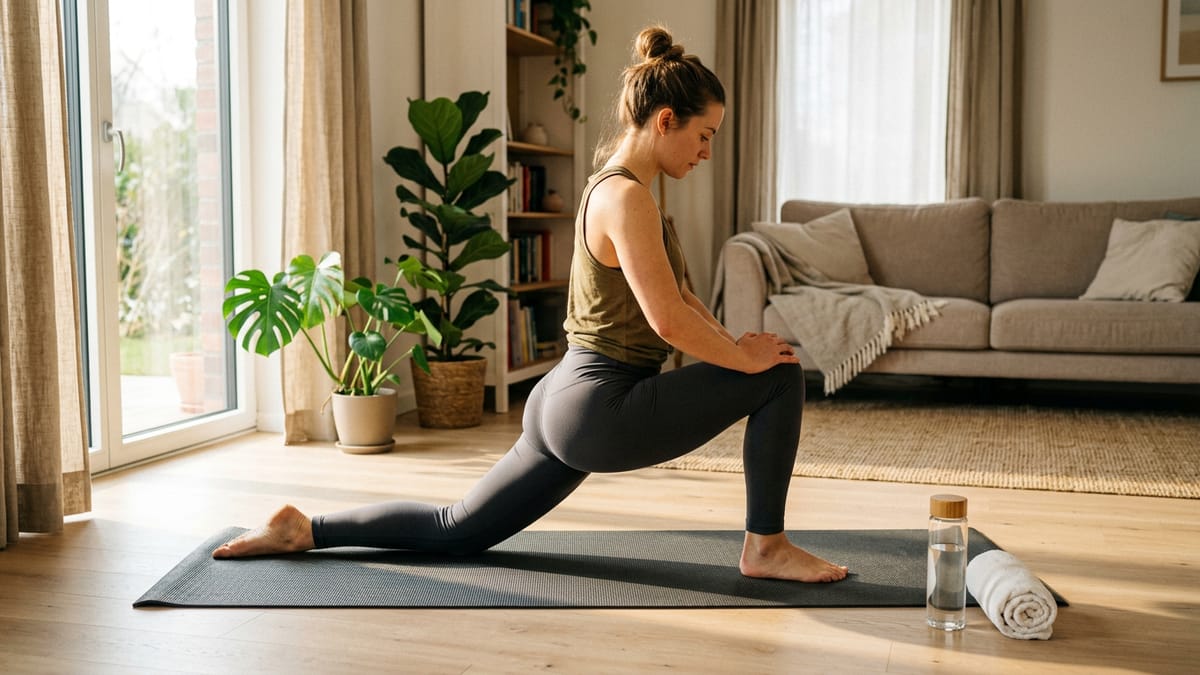
When you push your limits during high-intensity intervals or heavy strength training sessions, you are actively breaking down muscle tissue and stressing your central nervous system. The actual fitness adaptations—the strength gains, the improved cardiovascular endurance, and the muscle growth—happen while you recover. However, many people completely misunderstand what a rest day should look like. They either do absolutely nothing, allowing their muscles to stiffen and ache, or they push too hard and turn a rest day into just another grueling workout. The sweet spot lies in active recovery, and structuring it with a workout clock can completely transform how your body feels.
What is Active Recovery and Why Does it Matter?
Active recovery involves performing low-intensity exercise that promotes blood flow to your muscles without putting significant strain on your joints or central nervous system. When you experience Delayed Onset Muscle Soreness (DOMS) after a hard training session, your muscles are inflamed and tight. While resting on the couch might sound appealing, remaining entirely sedentary can actually prolong the feeling of stiffness.
By engaging in light movement, you increase your heart rate just enough to pump oxygen-rich blood and essential nutrients to the damaged muscle tissues. This gentle circulation helps flush out metabolic waste products that accumulated during your hard workouts. Additionally, active recovery routines that focus on mobility and dynamic stretching help maintain and improve your joint range of motion, preventing the muscle shortening and tightness that often accompany heavy lifting or repetitive cardio.
Why You Should Use a Workout Clock for Mobility
One of the biggest mistakes people make when stretching or doing mobility work is rushing through it. Without a structured timeline, a planned 20-minute recovery session often devolves into five minutes of half-hearted hamstring stretches before you get bored and walk away. Alternatively, you might focus entirely on counting reps, which keeps your mind engaged in a "work" state rather than a relaxed state.
Using a workout clock shifts your focus away from counting and allows you to concentrate entirely on your breathing and the physical sensation of the movement. When the clock is running, you know exactly how long you need to stay in a stretch or continue a dynamic flow. It forces you to slow down, breathe deeply into your diaphragm, and truly allow your nervous system to shift from the sympathetic "fight or flight" state into the parasympathetic "rest and digest" state. This neurological shift is just as important as the physical movement for proper recovery.
The 20-Minute Active Recovery Flow
This routine is designed to mobilize your entire body from head to toe, with a strong emphasis on the spine, hips, and shoulders—the areas that tend to take the most punishment during everyday life and intense workouts. The protocol uses a 30-seconds-on, 30-seconds-off interval structure. However, instead of resting during the "off" period, you will use the first 30 seconds for dynamic movement and the second 30 seconds for a static hold of that same position.
The Setup
To follow along, open your workout clock and set it up for 20 rounds of 30 seconds of work and 30 seconds of rest. This gives you exactly 20 minutes of continuous, controlled movement. You will perform the following 10 movements sequentially. Once you complete all 10, you will repeat the entire sequence for a second round.
| Movement Number | Exercise Focus | Work Interval (30s) | Rest Interval (30s) |
|---|---|---|---|
| 1 | Cat-Cow | Dynamic spinal flexion and extension | Neutral spine deep breathing |
| 2 | World's Greatest Stretch (Right) | Dynamic elbow drops to ceiling reaches | Static ceiling reach hold |
| 3 | World's Greatest Stretch (Left) | Dynamic elbow drops to ceiling reaches | Static ceiling reach hold |
| 4 | 90/90 Hip Switches | Dynamic windshield wiper hip rotations | Static forward fold over front leg |
| 5 | Downward Dog to Plank | Dynamic shifts between plank and downward dog | Static Downward Dog hold |
| 6 | Deep Squat Prying | Dynamic weight shifting side to side | Static deep squat hold |
| 7 | Thread the Needle (Right) | Dynamic rotational reaches | Static threaded shoulder hold |
| 8 | Thread the Needle (Left) | Dynamic rotational reaches | Static threaded shoulder hold |
| 9 | Glute Bridge Reaches | Dynamic bridge with diagonal overhead reach | Static double leg glute bridge hold |
| 10 | Child's Pose with Side Reaches | Dynamic walking hands side to side | Static center Child's Pose hold |
Movement Breakdown and Form Guide
Executing these movements with intention is crucial. Do not push into sharp pain. If a movement feels incredibly tight, reduce your range of motion and focus on breathing through the restriction.
1. Cat-Cow
Begin on your hands and knees with your wrists directly under your shoulders and knees under your hips. During the 30-second dynamic phase, slowly arch your back, dropping your belly toward the floor and lifting your chest and tailbone (Cow). Then, round your spine toward the ceiling, tucking your chin and tailbone (Cat). Move smoothly between these two shapes, matching your breath to the movement. During the 30-second static phase, find a neutral spine and practice deep diaphragmatic breathing, expanding your ribcage in 360 degrees.
2 & 3. World's Greatest Stretch (Right and Left)
Start in a high plank position and step your right foot outside your right hand. During the dynamic phase, drop your right elbow down toward the floor inside your right foot, then rotate your torso to reach your right arm straight up toward the ceiling. Continue dropping the elbow and reaching up. For the static hold, keep your arm extended toward the ceiling, actively pressing the floor away with your bottom hand while keeping your back leg as straight as possible. Repeat on the left side for the next interval.
4. 90/90 Hip Switches
Sit on the floor with your knees bent and feet flat, wider than hip-width apart. Drop both knees to the right side so your front and back legs both form 90-degree angles. Use your hands behind you for support if needed. Slowly lift your knees and drop them to the left side like windshield wipers. Continue switching sides dynamically. For the static phase, choose your tighter side, square your chest over your front knee, and gently hinge forward from the hips to stretch the glute.
5. Downward Dog to Plank
Begin in a high plank. Push your hips up and back into a Downward-Facing Dog, actively pressing your chest toward your thighs and your heels toward the floor. Shift back forward into a strong plank. Continue shifting back and forth to dynamically stretch the calves, hamstrings, and shoulders. For the static phase, hold the Downward Dog position, pedaling your feet slightly if it feels good, but focusing on lengthening the spine.
6. Deep Squat Prying
Stand with your feet slightly wider than shoulder-width apart. Sink down into the deepest squat your mobility allows while keeping your heels on the floor. Bring your hands together in a prayer position and use your elbows to gently press your knees outward. During the dynamic phase, gently shift your weight from left to right, mobilizing the ankles and hips. During the static phase, hold the center position, lift your chest proudly, and breathe deeply.
7 & 8. Thread the Needle (Right and Left)
Return to a tabletop position on your hands and knees. Take your right arm and reach it underneath your left arm, dropping your right shoulder and the right side of your head toward the floor. Press back up and reach the right arm toward the ceiling. Continue this sweeping motion. For the static phase, keep the shoulder resting on the floor and gently press your left hand into the mat to deepen the upper back stretch. Repeat on the left side.
9. Glute Bridge Reaches
Lie on your back with your knees bent and feet flat on the floor. Drive through your heels to lift your hips into a bridge. As your hips rise, reach your right arm diagonally across your body and over your left shoulder, touching the floor behind you. Lower your hips and repeat with the left arm. Continue alternating. For the static phase, hold a standard glute bridge with both arms resting on the floor, focusing on squeezing the glutes and opening the front of the hips without overarching the lower back.
10. Child's Pose with Side Reaches
From a kneeling position, sit your hips back onto your heels and reach your arms straight out in front of you on the floor. During the dynamic phase, slowly walk both hands as far to the right as you can until you feel a stretch along your left lat and ribcage. Then slowly walk them over to the left side. For the static phase, walk your hands back to the center, rest your forehead on the floor, and take long, slow, deep breaths to signal to your body that the session is complete.
Breathing and Mindset Guidelines
The success of an active recovery session depends heavily on your breathing mechanics. When we exercise intensely, we tend to take short, shallow breaths into our chest. Recovery requires the opposite. Throughout this entire 20-minute workout clock session, breathe exclusively through your nose if possible. Focus on nasal, diaphragmatic breathing. Inhale for a slow count of four, feeling your belly and lower ribs expand, and exhale for a slow count of six to eight.
Lengthening your exhales is scientifically shown to stimulate the vagus nerve, which directly activates the parasympathetic nervous system. If you find yourself holding your breath during a stretch, it means you have gone too far into the range of motion. Back off slightly until you can breathe calmly and rhythmically.
Scheduling Your Recovery Days
You can perform this mobility flow whenever you feel stiff, but it is especially beneficial the day after your most intense workouts of the week. For example, if you do heavy lower-body strength training on Tuesday, Wednesday is the perfect day to fire up your workout clock for this active recovery routine. You can also use this exact protocol as an extended warm-up before a heavy lifting session to ensure your joints are properly lubricated and prepared for the load. Consistency is key; aim to complete a dedicated mobility and recovery session at least one to two times per week to keep your body resilient, injury-free, and ready for your next intense workout.
Frequently asked questions
Is it better to rest completely or do active recovery?
For most people, light active recovery promotes better blood flow and reduces stiffness compared to complete rest. However, total rest days are still necessary if you are dealing with an injury or severe systemic fatigue.
How many times a week should I do a mobility flow?
Aim for 1 to 2 dedicated active recovery sessions per week. They are most effective when scheduled the day after your heaviest lifting or most intense interval sessions.
Do I need to warm up before a recovery workout?
Since active recovery is essentially a prolonged, low-intensity warm-up itself, you do not need a separate warm-up. Start slowly, breathe deeply, and gradually increase your range of motion as your body warms up during the flow.
Can I hold the stretches longer than 30 seconds?
Yes, you can adjust the timer to suit your needs. If you want to focus more on flexibility rather than dynamic mobility, setting the clock for 45 to 60 seconds per static hold is a great alternative.
Use this timer
Start the 20 minutes: 30s / 30s timer — 30s work / 30s rest × 20 rounds. It runs in your browser with sound cues, and there is nothing to install.