Build Athletic Agility: A 20-Minute Bodyweight Interval Routine
By Simple HIIT Timer Team · October 24, 2026
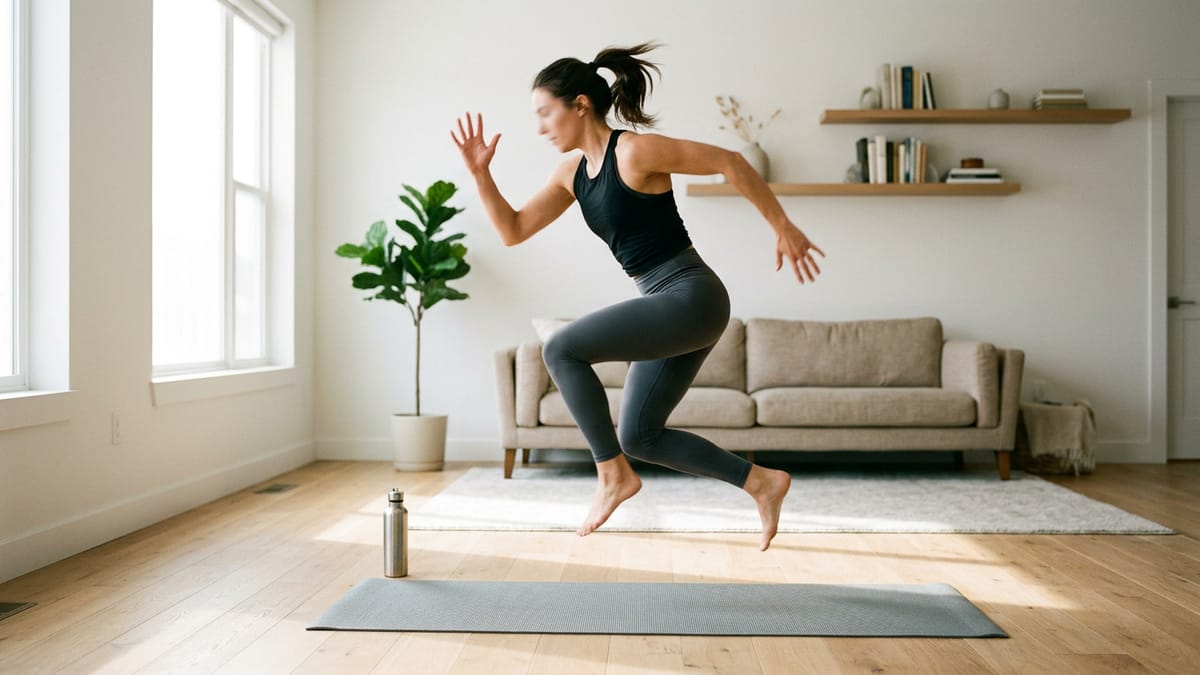
Building an athletic, highly capable physique does not require a gym full of equipment. Functional fitness routines designed around agility, core stability, and explosive movement are highly effective for developing both muscle and cardiovascular endurance simultaneously. By using a structured 20-minute interval workout, you can train your body to move with the speed and control of an athlete, all from your living room.
Many traditional cardio workouts, like running or cycling, lock you into a single plane of motion. You move forward, and your joints only hinge in one direction. Agility training challenges you to move laterally, rotate your core, and control your body weight through space. This not only burns a high amount of energy but also builds resilient joints and practical, real-world strength.
The 40/20 Interval Protocol Explained
To maximize this routine, you will use a work-to-rest ratio of 40 seconds of effort followed by 20 seconds of rest. This specific timing structure offers several distinct advantages for bodyweight conditioning:
- Time Under Tension: Forty seconds is long enough to fatigue the targeted muscle groups, which is a key driver for muscle growth and endurance.
- Cardiovascular Demand: Working for twice as long as you rest keeps your heart rate elevated in a moderate-to-high intensity zone throughout the entire session.
- Form Maintenance: The 20-second rest period is brief, but it is just enough time to reset your breathing, shake out your limbs, and prepare for the next movement with proper mechanics.
Because you are working for 20 total minutes, pacing is critical. If you sprint through the first two minutes, your form will break down by minute ten. Treat the 40-second work intervals as a controlled, steady effort rather than an all-out sprint.
The 20-Minute Agility and Core Workout
This routine consists of five exercises performed as a circuit. You will complete four total rounds. Set your workout timer for 20 rounds of 40 seconds on and 20 seconds off. No equipment is needed, though a yoga mat is recommended for comfort.
| Exercise | Primary Target | Movement Focus |
|---|---|---|
| 1. Spider Crawls | Core, Shoulders, Hips | Mobility and Core Stability |
| 2. Lateral Skater Jumps | Glutes, Quads, Calves | Lateral Power and Agility |
| 3. Explosive Push-Ups | Chest, Triceps, Shoulders | Upper Body Power |
| 4. Hollow Body to Tuck Crunch | Abdominals, Hip Flexors | Core Control |
| 5. Reverse Lunge to Knee Drive | Legs, Glutes, Core | Balance and Explosiveness |
1. Spider Crawls
Spider crawls build incredible core strength while actively stretching your hips and engaging your shoulders. They require coordination and control.
Start in a strong high plank position with your hands directly under your shoulders. Step your right foot forward, placing it flat on the floor outside your right hand. As you do this, lower your hips slightly to feel a stretch, keeping your back flat. Push off your right foot to return to the plank position, then immediately repeat on the left side. Alternate sides continuously for 40 seconds. Keep your movements deliberate; do not let your hips sag toward the floor.
2. Lateral Skater Jumps
This exercise targets the frontal plane (side-to-side movement), which is vital for athletic agility and knee stability.
Stand on your right leg with your left knee slightly bent and your left foot lifted off the floor. Bound laterally to your left, landing softly on your left foot. As you land, let your right leg sweep behind your left leg, and drop your hips slightly to absorb the impact. Immediately push off your left foot to jump back to the right. Use your arms to generate momentum. If the jumping is too intense, perform lateral step-and-reaches instead, stepping wide and sweeping the back leg without leaving the ground.
3. Explosive Push-Ups
Building upper body power requires speed. Explosive push-ups train your fast-twitch muscle fibers.
Assume a standard push-up position. Lower your chest to the floor with control. As you press up, push through your palms with enough force that your hands briefly leave the floor. Land softly with soft elbows and immediately lower into the next repetition. Scaling option: If you cannot perform these safely on your toes, drop to your knees and perform the exact same explosive movement, or simply perform standard push-ups at a faster tempo on the upward phase.
4. Hollow Body to Tuck Crunch
This gymnastics-inspired movement builds deep abdominal strength and teaches you how to brace your core—a necessary skill for all athletic movements.
Lie on your back. Press your lower back firmly into the floor, squeeze your legs together, and lift your legs a few inches off the ground while reaching your arms overhead (the hollow body position). Hold this tension for a second, then quickly pull your knees to your chest and bring your arms forward to hug your shins (the tuck crunch). Extend back out to the hollow position slowly. If your lower back arches off the floor at any point, raise your legs higher toward the ceiling to regain the correct pelvic tilt.
5. Reverse Lunge to Knee Drive
This complex movement challenges your balance, unilateral leg strength, and explosive hip flexion.
Stand tall. Step your right foot back and lower your hips until both knees form 90-degree angles. From the bottom of the lunge, drive through your left heel and explode upward, driving your right knee forward and up toward your chest. You can add a small hop on your left foot at the top of the movement for extra power. Land softly and step right back into the lunge. Switch legs halfway through the 40-second interval, or alternate legs on every single rep depending on your preference.
How to Pace Your 20-Minute Workout
Because 40 seconds is a long work interval, pacing dictates your success. During the first round, treat the circuit as an extended, dynamic warm-up. Gauge how many repetitions you can comfortably perform for each exercise without breaking your form.
During rounds two and three, try to match that initial repetition count. By the fourth round, fatigue will set in. Your goal is not necessarily to go faster, but to maintain the range of motion. For example, if your skater jumps become shallow steps, consciously focus on pushing wider and absorbing the landing, even if it means doing fewer total reps.
Warm-Up and Cool-Down Recommendations
Jumping into explosive movements with cold muscles increases your risk of injury. Always prepare your body and properly recover.
Dynamic Warm-Up (3-4 Minutes)
Spend a few minutes elevating your core temperature and lubricating your joints. Perform 30 seconds each of high knees, butt kicks, arm circles, and bodyweight squats. Move into a downward dog position and gently pedal your feet to stretch your calves and hamstrings. Finish with a few slow lunges to open up your hip flexors.
Cool-Down and Mobility (3-4 Minutes)
Once your final interval finishes, do not immediately sit down. Walk around your space for one to two minutes to let your heart rate gradually return to baseline. Then, spend a few minutes stretching the muscles you heavily taxed. Focus on a standing quad stretch, a kneeling hip flexor stretch, and a chest opener (interlacing your fingers behind your back and gently lifting your arms).
Scaling the Routine for Your Fitness Level
Interval training is highly adaptable. If the 40/20 structure is too demanding right now, you can adjust the intervals to better suit your current conditioning. A 30-second work and 30-second rest format is an excellent starting point that provides equal time for recovery. You can easily set this up using an exercise timer.
Always prioritize form over speed. If an exercise causes joint pain—rather than muscle fatigue—stop immediately and choose a modification. Consult a doctor or physical therapist before starting any new, high-intensity plyometric routine, especially if you are managing a previous injury, joint condition, or are pregnant.
By committing just 20 minutes a few times a week to this style of training, you will build a body that doesn't just look strong, but moves with real athletic capability.
Frequently asked questions
Can I build muscle with just a 20-minute bodyweight workout?
Yes, provided you apply enough intensity and time under tension. Explosive movements and challenging leverages create the necessary stimulus for muscle adaptation.
How many times a week should I do this agility routine?
Aim for two to three times a week on non-consecutive days. This allows your muscles and joints adequate time to recover from the explosive plyometric movements.
Is a 40-second work interval too long for beginners?
Forty seconds can be challenging if performed at maximum speed. Beginners should focus on a steady, controlled pace or modify the movements to lower-impact versions to sustain the effort.
Use this timer
Start the 20-minute session timer — 40s work / 20s rest × 20 rounds. It runs in your browser with sound cues, and there is nothing to install.