MMA Conditioning at Home: A 3-Round Bodyweight Workout
By Simple HIIT Timer Team · October 24, 2026
Mixed martial arts requires a unique blend of cardiovascular endurance, explosive power, and muscular stamina. As community MMA and fitness clubs grow in popularity, more people are discovering that you do not need to spar or step into a cage to reap the physical benefits of fighter conditioning. You can build incredible work capacity right in your living room or garage using just your body weight and a clock.
Professional mixed martial arts non-title fights consist of three five-minute rounds with a one-minute rest in between. This structure demands pacing, burst energy, and the ability to recover quickly under fatigue. Traditional high-intensity interval training often relies on short bursts of 30 or 40 seconds. Pushing your work period to a full five minutes forces your body to manage lactic acid buildup and maintain continuous movement, which drastically improves your overall stamina.
This 15-minute bodyweight routine simulates the physical demands of a three-round fight. You will tackle three distinct rounds: striking and agility, ground control and core, and explosive lower-body power. By setting up a boxing timer for three five-minute rounds, you can focus entirely on your form and breathing without watching the clock.
The Dynamic Warm-Up Protocol
Before attempting five-minute blocks of continuous effort, you must prepare your joints and elevate your core temperature. A cold body is more susceptible to injury, especially during explosive movements like sprawls and jumps. Spend five minutes performing the following dynamic stretches.
- Arm Circles and Torso Twists: Spend 60 seconds opening up your shoulders and loosening your thoracic spine. Keep your feet planted and rotate your torso smoothly from side to side.
- Leg Swings: Spend 60 seconds swinging your legs forward and backward, then side to side. Use a wall for balance. This opens the hips for lunging and squatting movements.
- Bodyweight Squats: Perform slow, controlled squats for 60 seconds. Focus on depth and keeping your chest upright to prime your quadriceps and glutes.
- High Knees to Light Jog: Spend the last two minutes gradually increasing your heart rate with a light jog in place, transitioning into high knees for the final 30 seconds.
Round 1: Striking and Agility
The first round focuses on cardiovascular endurance, coordination, and footwork. You will stay light on your feet and keep your hands up, simulating the movement of a fighter looking for an opening. Work continuously for the full five minutes, changing exercises at the top of each minute.
- Minute 1: Light Shadowboxing. Move around your space using basic footwork. Throw straight punches (jabs and crosses) into the air. Do not snap your elbows into full lockout; keep the movements fluid and focused on keeping your heart rate elevated.
- Minute 2: The Sprawl and Reset. A sprawl is how a fighter defends a takedown. Drop your hands to the floor, shoot your legs backward aggressively so your hips drop toward the ground, then immediately jump your feet back under you and stand up in a fighting stance. Repeat continuously.
- Minute 3: Lateral Shuffles. Stay in a low, athletic stance and shuffle three steps to the left, touch the ground, and shuffle three steps to the right. This builds lateral agility and works the outer glutes.
- Minute 4: Power Shadowboxing. Increase the intensity from minute one. Add hooks, uppercuts, and defensive slips. Move with urgency and put more speed into your combinations.
- Minute 5: Active Footwork. Do not stop moving, but lower the intensity. Bounce lightly on your toes, practice pivoting on your lead foot, and focus on taking deep, controlled breaths to prepare for the upcoming rest period.
Round 2: Ground Control and Core
After a 60-second rest, round two shifts to the floor. In MMA, grappling requires immense upper body strength, core stability, and muscular endurance. This round will heavily tax your shoulders, chest, and abdominals.
- Minute 1: Strict Push-Ups. Keep your hands roughly shoulder-width apart, brace your core, and lower your chest to the floor. If you reach muscular failure, drop to your knees or hold a high plank rather than stopping completely.
- Minute 2: Bear Crawls. Keep your hips low and your knees hovering just an inch off the floor. Crawl forward for four steps, then backward for four steps. This demands intense shoulder stability and core engagement.
- Minute 3: Alternating Sit-Outs. From a bear crawl position, lift your right hand and kick your left leg through under your body, opening your chest to the ceiling. Return to the center and repeat on the other side. This mimics escaping from the bottom position in grappling.
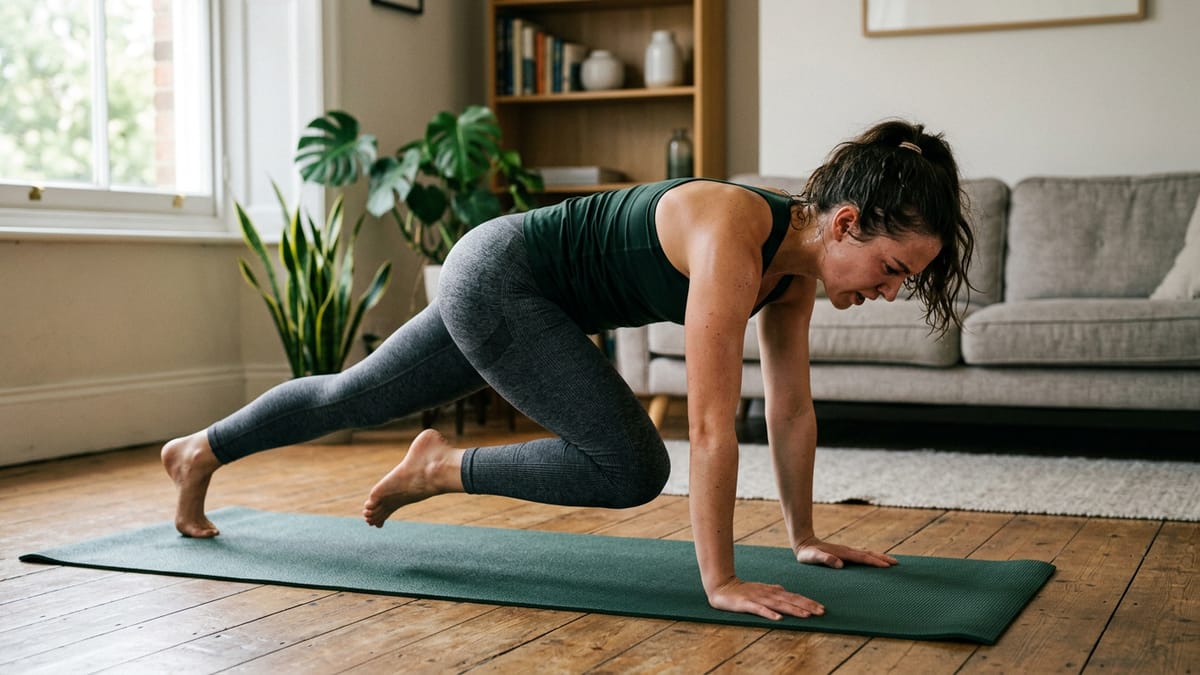
- Minute 4: Mountain Climbers. From a high plank, drive your knees toward your chest in a rapid, alternating fashion. Keep your shoulders directly over your wrists and do not let your hips bounce up and down.
- Minute 5: Low Plank Hold. Drop to your forearms and hold a rigid plank for the final minute. Your shoulders and core will be heavily fatigued at this point; focus entirely on bracing your stomach and breathing through the discomfort.
Round 3: Explosive Power
The final round is where endurance is truly tested. Championship rounds require athletes to dig deep and generate power even when their legs feel heavy. This round targets the lower body with explosive plyometric movements.
- Minute 1: Squat Jumps. Lower into a standard squat, then drive through your heels to explode upward, leaving the floor. Land softly with bent knees and immediately descend into the next repetition.
- Minute 2: Alternating Forward Lunges. Step forward with one leg, lowering your back knee until it lightly grazes the floor. Push off the front foot to return to the starting position. This slows the heart rate slightly while building unilateral leg strength.
- Minute 3: Glute Bridges. Lie on your back with your knees bent and feet flat on the floor. Drive your hips upward, squeezing your glutes at the top, then lower back down. This provides a brief cardiovascular recovery while working the posterior chain.
- Minute 4: Skater Jumps. Leap laterally from your right foot to your left foot, sweeping your right leg behind your left ankle, similar to a speed skater. This movement builds explosive lateral power and challenges your balance.
- Minute 5: Burpees. Empty the tank. Drop your chest to the floor, jump your feet back under you, and jump vertically at the top. Perform as many repetitions as possible until the final bell rings.
Mastering the 60-Second Rest
The one-minute rest period between rounds is just as critical as the work itself. When the timer signals the end of a round, do not immediately sit down or collapse on the floor. Standing or walking slowly helps your body clear lactic acid and prevents blood from pooling in your extremities.
Use this time to take slow, deep breaths—inhale through your nose to fill your diaphragm, and exhale fully through your mouth. Take small sips of water rather than gulping it, which can cause cramping during the next round. Mentally review the exercises for the upcoming five-minute block so you are ready to move the second the bell sounds.
Scaling the Workout for Your Fitness Level
Five minutes of continuous movement is highly demanding. If you are new to this style of training, you must scale the movements to maintain safety and proper form. Always consult with a doctor before beginning a new, high-intensity exercise program, especially if you have a history of cardiovascular or joint issues.
Modifications for Beginners
If you cannot sustain a full minute of a single exercise, break the minute into smaller intervals, such as 40 seconds of work followed by 20 seconds of rest, before transitioning to the next movement. Swap plyometric exercises for low-impact alternatives. Perform standard bodyweight squats instead of squat jumps, step back into your sprawls and burpees instead of jumping, and perform push-ups from an elevated surface like a sturdy bench or chair.
Progressions for Advanced Athletes
If you already possess excellent cardiovascular conditioning, you can increase the difficulty without adding equipment. Focus on increasing your repetition count within each minute. You can also add a weighted vest to increase the resistance on your bodyweight movements. For the ultimate endurance challenge, you can adjust the presets on your timer to perform five rounds of five minutes, simulating a professional championship bout.
By incorporating this MMA-style conditioning routine into your schedule two to three times a week, you will build functional strength, improve your agility, and develop the kind of lasting cardiovascular endurance that carries over into every other physical activity you pursue.
Frequently asked questions
Can I do MMA conditioning every day?
Training with high intensity every day can lead to overtraining and fatigue. It is best to perform this routine two to three times a week on non-consecutive days, allowing your muscles and central nervous system time to recover.
Do I need a punching bag for an MMA workout?
No equipment is required for this bodyweight conditioning routine. You will use shadowboxing, dynamic movement, and bodyweight exercises to simulate the cardiovascular demands of a fight without needing a bag or gloves.
How do I pace myself for a 5-minute round?
Start at a moderate, sustainable pace for the first two minutes rather than sprinting from the bell. Focus on steady breathing and continuous movement, saving your maximum explosive effort for the final minute of the round.
What if I cannot complete a full minute of an exercise?
If you reach muscular failure before the minute is up, pause for a few seconds, shake out your limbs, and resume at a slower pace. You can also switch to a lower-impact modification, such as trading jump squats for standard bodyweight squats, to keep moving until the timer beeps.
Use this timer
Start the MMA: 3 x 5 min timer — 300s work / 60s rest × 3 rounds. It runs in your browser with sound cues, and there is nothing to install.