The 7-Move Fundamental Strength Circuit for Total Fitness
By Simple HIIT Timer Team · November 21, 2026
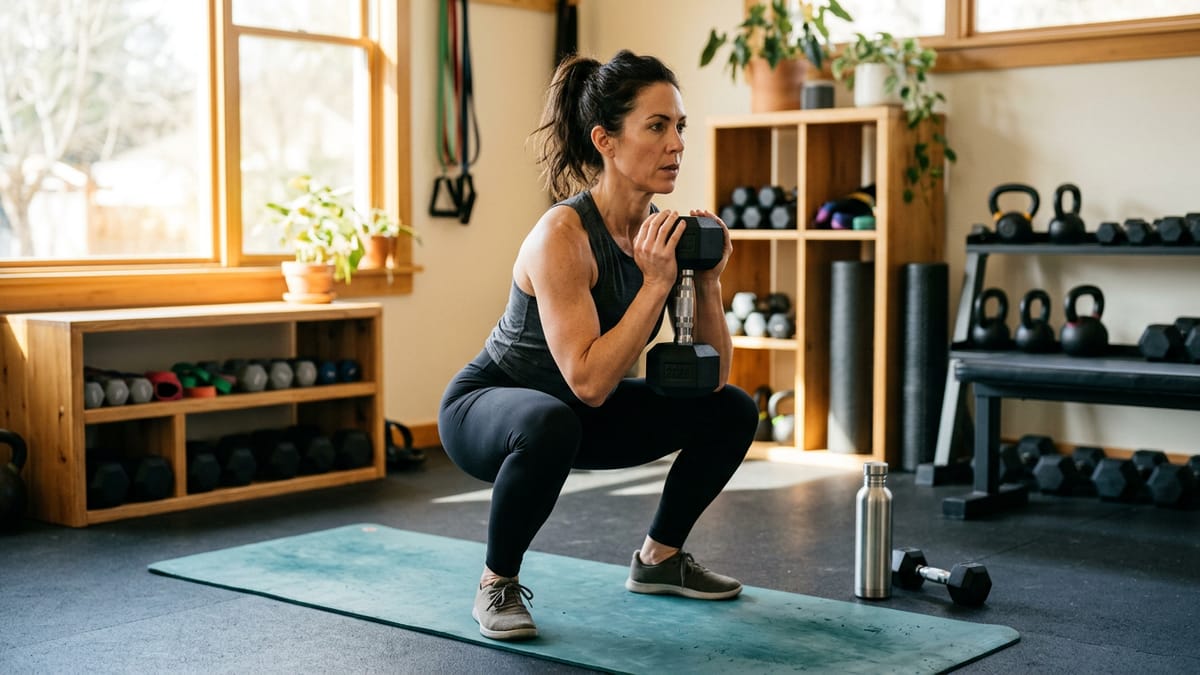
Strength training is currently experiencing a massive cultural shift. People are realizing that lifting weights is not just for bodybuilders; it is the ultimate tool for healthy aging, changing your body composition, and building lifelong resilience. Whether you are in your twenties or approaching your sixties, mastering a core set of movements is the most effective way to transform your fitness.
You do not need to spend two hours in the gym or memorize dozens of complex exercise variations. Instead, you can build a complete routine around the basic human movement patterns: squatting, hinging, pushing, pulling, lunging, carrying, and bracing your core. By organizing these patterns into a time-based fundamental strength circuit, you can build muscle, increase your heart rate, and finish your workout in under 30 minutes.
Why Focus on Movement Patterns?
When you train movement patterns rather than isolated muscles, you teach your body to work as a single, coordinated unit. This functional approach mimics the way you move in daily life, whether you are picking up heavy groceries, playing with your kids, or climbing a steep flight of stairs.
A well-rounded strength routine should include the following seven categories:
- Squat: Bending at the knees and hips to lower your center of gravity.
- Hinge: Bending at the hips while keeping the shins relatively vertical, engaging the posterior chain.
- Push: Moving a load away from your body.
- Pull: Moving a load toward your body.
- Lunge: Unilateral (single-leg) training that builds balance and addresses muscle imbalances.
- Carry: Moving under load to build full-body tension, grip strength, and core stability.
- Core: Resisting movement to stabilize your spine.
The Circuit Setup
To keep this workout time-efficient and effective, you will use a circuit timer set to 45 seconds of work and 15 seconds of transition time.
Working for 45 seconds allows you to complete 10 to 15 controlled repetitions of an exercise. The goal is not to rush through the reps. Instead, focus on time under tension. Control the weight on the way down, pause briefly, and drive up with power. The 15-second transition gives you just enough time to safely put your weights down and move to the next station.
Complete 3 to 4 rounds of the following 7 exercises. Rest for 60 to 90 seconds between rounds to let your heart rate settle before starting again.
The 7-Move Fundamental Strength Circuit
1. The Squat: Dumbbell Goblet Squat
The goblet squat is highly effective for building leg strength and reinforcing proper torso positioning. Holding the weight in front of your chest naturally encourages you to keep your chest up and your core braced.
How to do it: Hold a single dumbbell vertically against your chest with both hands. Stand with your feet slightly wider than shoulder-width apart. Push your hips back and bend your knees to lower into a squat, aiming to get your thighs parallel to the floor. Drive through your full foot to return to the starting position.
2. The Hinge: Romanian Deadlift (RDL)
The Romanian deadlift targets your hamstrings, glutes, and lower back. It is essential for a strong, healthy posterior chain.
How to do it: Hold a dumbbell in each hand in front of your thighs. Stand with feet hip-width apart and a slight, soft bend in your knees. Keeping your back flat and your core tight, push your hips backward as if trying to touch a wall behind you. Lower the weights down your legs until you feel a deep stretch in your hamstrings. Squeeze your glutes and push your hips forward to stand back up.
3. The Push: Push-Up
The classic push-up remains one of the best upper-body exercises available. It trains your chest, shoulders, and triceps while demanding intense core stabilization.
How to do it: Start in a high plank position with your hands planted directly under your shoulders. Lower your body in a straight line until your chest hovers just above the floor. Keep your elbows tucked at a 45-degree angle; do not let them flare out to the sides. Press firmly through your palms to return to the top. Modification: If full push-ups are too challenging, perform them with your hands elevated on a sturdy bench or box rather than dropping to your knees. This better preserves the core engagement.
4. The Pull: Dumbbell Bent-Over Row
To counteract the slouched posture of modern life, you need to strengthen your back. The bent-over row targets the lats, rhomboids, and traps.
How to do it: Hold a dumbbell in each hand. Hinge at your hips just like you did for the RDL, keeping your back flat and your torso at a 45-degree angle to the floor. Let your arms hang straight down. Squeeze your shoulder blades together and pull your elbows up toward the ceiling, bringing the dumbbells to the sides of your ribcage. Lower the weights back down with control.
5. The Lunge: Alternating Reverse Lunge
Unilateral exercises expose and correct left-to-right imbalances. Reverse lunges are generally easier on the knees than forward lunges.
How to do it: Hold a dumbbell in each hand by your sides. Take a controlled step backward with your right foot. Lower your hips until both knees are bent at a 90-degree angle. Your back knee should hover just above the floor. Push off your front foot to return to the starting position, then repeat on the other side. Continue alternating legs for the entire 45 seconds.
6. The Carry: Farmer's Carry
Carries are incredibly functional. They build grip strength, shoulder stability, and core endurance all at once.
How to do it: Pick up the heaviest pair of dumbbells or kettlebells you can safely handle. Stand tall, pull your shoulders down and back, and brace your core. Walk forward with slow, deliberate steps. If you are in a small room, walk back and forth. Keep your torso perfectly upright; do not let the weights pull you side to side.
7. The Core: Dead Bug
The dead bug is a core stability exercise that teaches you how to brace your abdominals while moving your extremities, which protects your lower back.
How to do it: Lie on your back with your arms extended straight up toward the ceiling and your knees bent at 90 degrees (shins parallel to the floor). Press your lower back firmly into the floor. Slowly lower your right arm behind your head and your left leg toward the floor simultaneously. Stop just before they touch the ground, return to the center, and switch sides. The key is to never let your lower back arch off the floor.
Workout Summary
| Station | Movement Pattern | Exercise | Work / Rest |
|---|---|---|---|
| 1 | Squat | Goblet Squat | 45s / 15s |
| 2 | Hinge | Romanian Deadlift | 45s / 15s |
| 3 | Push | Push-Up | 45s / 15s |
| 4 | Pull | Dumbbell Bent-Over Row | 45s / 15s |
| 5 | Lunge | Alternating Reverse Lunge | 45s / 15s |
| 6 | Carry | Farmer's Carry | 45s / 15s |
| 7 | Core | Dead Bug | 45s / 15s |
How to Progress This Circuit
To continually build strength, you must practice progressive overload. Since the timer dictates the length of your sets, you can progress in three main ways:
- Increase the Weight: Once you can comfortably perform an exercise for the full 45 seconds without losing your form, it is time to pick up a slightly heavier dumbbell.
- Improve the Tempo: Slow down the eccentric (lowering) portion of the movement. Taking three seconds to lower into a squat makes the exercise significantly harder without adding weight.
- Increase the Reps: Try to get one or two more high-quality repetitions into the 45-second window without rushing or compromising your technique.
Safety and Preparation
Always prioritize your form over the amount of weight you are lifting. If you feel your lower back rounding during deadlifts or your posture breaking during carries, drop to a lighter weight immediately.
Before starting the timer, spend 5 to 10 minutes warming up. Perform dynamic movements like arm circles, bodyweight squats, and cat-cow stretches to lubricate your joints and raise your core temperature. If you have any preexisting injuries or medical conditions, consult with a doctor or physical therapist before beginning a new strength routine.
Commit to this 7-move fundamental strength circuit two to three times a week. By focusing on the essential movement patterns and utilizing a simple timer, you will build a stronger, more capable body that serves you well in every aspect of life.
Frequently asked questions
Can I do this strength circuit every day?
No, your muscles need time to recover and rebuild after resistance training. Aim for 2 to 3 non-consecutive days per week, allowing at least 48 hours of rest between full-body strength sessions.
What weight should I use for a 45-second interval?
Choose a weight that begins to feel challenging during the last 10 to 15 seconds of the interval. If you lose your form or have to stop before the timer beeps, the weight is too heavy.
Is it better to count reps or use a timer for strength training?
Both methods are highly effective. Using a timer removes the need to constantly count, ensures consistent time under tension, and keeps your total workout strictly on schedule.
Use this timer
Start the 45s station / 15s move timer — 45s work / 15s rest × 12 rounds. It runs in your browser with sound cues, and there is nothing to install.