How to Build a Full-Body Circuit Training Routine
By Simple HIIT Timer Team · October 5, 2026
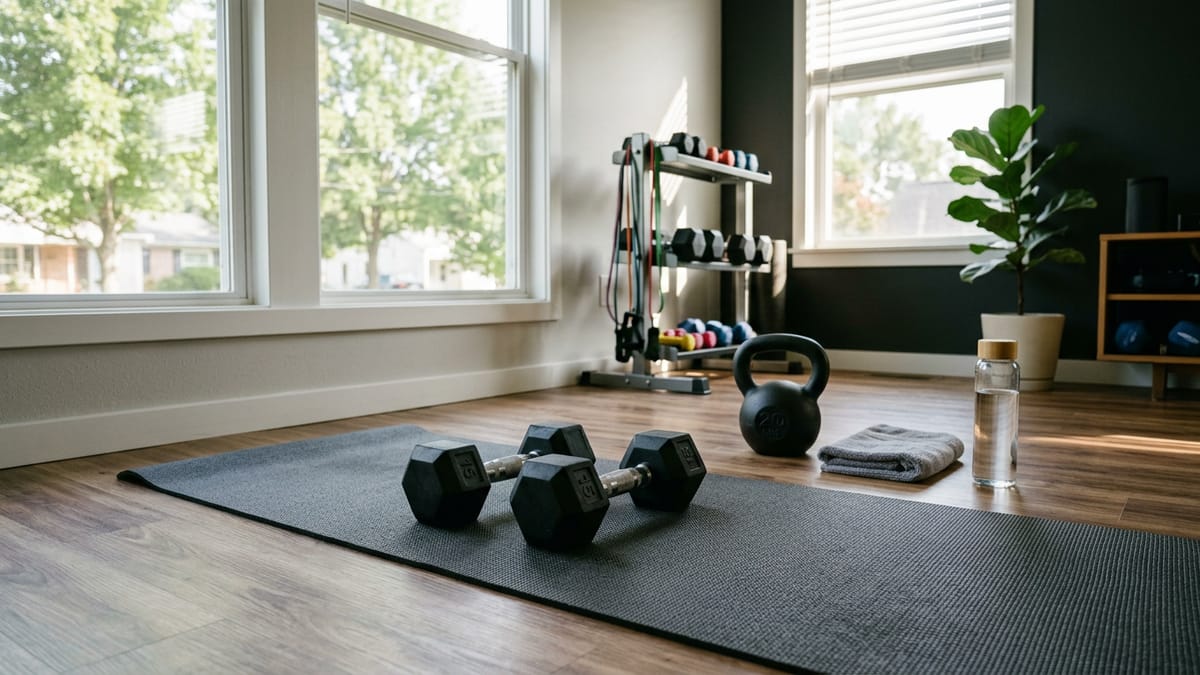
Finding the perfect balance between cardiovascular endurance and muscular strength can feel like a puzzle. If you spend all your time lifting heavy weights, your aerobic conditioning might lag. If you only focus on cardio, you risk losing muscle mass and raw power. This is where circuit training steps in. By linking together a series of exercises with minimal rest, you can build strength, improve your heart health, and maximize your time.
What Exactly Is Circuit Training?
Circuit training involves moving through a sequence of different exercises—referred to as stations—one after another. You perform a specific exercise for a set amount of time or a predetermined number of repetitions, take a brief transition period, and then immediately begin the next movement. Once you complete all the stations in the sequence, you have finished one round. Most workouts consist of three to five rounds, depending on your fitness level and available time.
Because you are constantly moving and working different muscle groups, your heart rate remains elevated throughout the session. While your upper body rests, your lower body works, and vice versa. This structured rotation prevents localized muscle fatigue from ending your workout prematurely while maintaining a high cardiovascular demand. Research on interval training suggests that this continuous, moderate-to-high intensity effort is highly effective for improving both metabolic conditioning and muscular endurance.
Why You Need a Dedicated Circuit Timer
When you are deep into a tough workout, the last thing you want to do is constantly check your watch or count seconds in your head. It is incredibly easy to accidentally extend your rest periods when you are fatigued, which reduces the cardiovascular benefit of the circuit. Conversely, cutting your rest too short can compromise your form on the next exercise.
Using a reliable circuit timer removes the guesswork. An auditory cue tells you exactly when to work and when to transition, allowing you to focus entirely on your form and effort. The timer keeps you honest, dictates the pace of the workout, and ensures you finish the routine in the exact timeframe you planned.
The 45/15 Protocol: A Blueprint for Success
For the routines in this guide, we will use a highly effective timing structure: 45 seconds of work followed by 15 seconds of transition. This is known as a time-based circuit.
During the 45-second work interval, your goal is to perform as many high-quality repetitions as possible. You are not rushing or sacrificing your form for speed; rather, you are maintaining a steady, challenging pace. The 15-second transition period is just enough time to safely set down your equipment, take a deep breath, move to the next station, and get into the starting position.
Routine 1: The 20-Minute Bodyweight Circuit
This routine requires zero equipment and only a few square feet of space. It is perfect for exercising at home, in a hotel room, or at a local park. Set your workout timer for 45 seconds of work and 15 seconds of rest for 6 stations. Complete 3 to 4 rounds, resting for 60 to 90 seconds between full rounds.
| Station | Exercise | Target Area |
|---|---|---|
| 1 | Bodyweight Squats | Quadriceps, Glutes, Hamstrings |
| 2 | Push-ups | Chest, Shoulders, Triceps, Core |
| 3 | Reverse Lunges | Legs, Balance, Coordination |
| 4 | Plank Shoulder Taps | Core Stability, Shoulders |
| 5 | Glute Bridges | Glutes, Lower Back, Hamstrings |
| 6 | Mountain Climbers | Cardio, Core, Hip Flexors |
Station 1: Bodyweight Squats
Stand with your feet shoulder-width apart, toes pointed slightly outward. Keep your chest up and your core braced. Initiate the movement by pushing your hips back and bending your knees, as if sitting in a chair. Lower yourself until your thighs are at least parallel to the floor, ensuring your knees track in line with your toes. Drive through your heels to return to the starting position. Focus on a smooth, controlled rhythm for the full 45 seconds.
Station 2: Push-ups
Assume a high plank position with your hands placed just outside shoulder-width. Your body should form a straight line from your head to your heels. Lower your body by bending your elbows, keeping them tucked at roughly a 45-degree angle to your torso. Press back up powerfully. If standard push-ups are too challenging to maintain for 45 seconds, modify by dropping to your knees or placing your hands on an elevated surface like a sturdy bench or chair.
Station 3: Reverse Lunges
Stand tall with your feet together. Take a controlled step backward with your right foot, lowering your hips until both knees are bent at a 90-degree angle. Your back knee should hover just above the floor, and your front knee should remain directly over your ankle. Push off your back foot to return to the starting position, then immediately alternate and step back with your left foot. Keep your torso upright throughout the movement.
Station 4: Plank Shoulder Taps
Return to the high plank position. Brace your core tightly and widen your feet slightly to create a stable base. Lift your right hand off the floor and tap your left shoulder, then return it to the floor. Lift your left hand and tap your right shoulder. The primary goal here is to prevent your hips from rocking side to side. Move slowly and deliberately to maximize core engagement.
Station 5: Glute Bridges
Lie on your back with your knees bent and your feet flat on the floor, hip-width apart. Rest your arms at your sides. Squeeze your glutes and push through your heels to lift your hips toward the ceiling until your body forms a straight line from your shoulders to your knees. Hold the top position for one second, actively engaging your glutes, before slowly lowering your hips back to the floor.
Station 6: Mountain Climbers
Finish the circuit with a cardio burst. Start in a high plank position with your shoulders directly over your wrists. Drive your right knee toward your chest, quickly return it to the starting position, and immediately drive your left knee toward your chest. Alternate legs rapidly, as if you are running in place horizontally. Keep your hips low and your core tight.
Routine 2: The Dumbbell Strength Circuit
If you have access to a pair of medium-weight dumbbells, you can significantly increase the resistance and muscle-building potential of your workout. This routine also uses the 45 seconds on, 15 seconds off format. Complete 3 to 4 rounds.
| Station | Exercise | Target Area |
|---|---|---|
| 1 | Dumbbell Thrusters | Full Body, Shoulders, Legs |
| 2 | Bent-Over Rows | Upper Back, Biceps, Lats |
| 3 | Romanian Deadlifts | Hamstrings, Glutes, Lower Back |
| 4 | Dumbbell Floor Press | Chest, Triceps, Shoulders |
| 5 | Weighted Russian Twists | Obliques, Core |
| 6 | Dumbbell Swings | Posterior Chain, Cardio |
Station 1: Dumbbell Thrusters
Hold a dumbbell in each hand at shoulder height, palms facing each other. Perform a deep squat, keeping your torso upright and your core braced. As you explosively stand up from the squat, use the momentum generated by your legs to press the dumbbells directly overhead until your arms are fully extended. Lower the weights back to your shoulders as you descend into the next squat. This is a highly demanding full-body movement that will spike your heart rate immediately.
Station 2: Bent-Over Rows
Hold a dumbbell in each hand. Hinge at your hips, pushing your glutes back while keeping your back perfectly straight and your knees slightly bent. Your torso should be nearly parallel to the floor. Let the dumbbells hang straight down. Pull the weights toward your ribcage, squeezing your shoulder blades together at the top of the movement. Slowly lower the weights back to the starting position. Avoid using momentum to jerk the weights up.
Station 3: Romanian Deadlifts (RDLs)
Stand tall with a dumbbell in each hand, resting in front of your thighs. Keep your legs mostly straight with just a slight bend in the knees. Hinge at your hips, pushing them backward as you lower the dumbbells down the front of your legs. Keep your back flat and the weights close to your body. You should feel a deep stretch in your hamstrings. Once the weights reach just below your knees, squeeze your glutes and push your hips forward to return to a standing position.
Station 4: Dumbbell Floor Press
Lie on your back with your knees bent and feet flat on the floor. Hold a dumbbell in each hand, arms extended over your chest. Slowly lower the weights until your upper arms rest completely on the floor. Pause for a split second, then press the dumbbells back up to the starting position. The floor press limits your range of motion compared to a bench press, which protects your shoulders while heavily targeting your triceps and chest.
Station 5: Weighted Russian Twists
Sit on the floor holding a single dumbbell with both hands. Lean your torso back slightly until you feel your core engage. You can keep your heels lightly resting on the floor or hover them a few inches in the air for an advanced challenge. Rotate your torso to the right, bringing the dumbbell toward the floor beside your hip. Rotate back through the center and over to the left side. Focus on twisting from your midsection, not just moving your arms.
Station 6: Dumbbell Swings
Hold one dumbbell vertically by one end with both hands. Stand with your feet wider than shoulder-width apart. Hinge at your hips, pushing your glutes back, and let the dumbbell swing between your legs. Explosively drive your hips forward and squeeze your glutes to swing the dumbbell up to chest height. The power should come entirely from your hips and legs, not your shoulders. Let gravity pull the weight back down between your legs to initiate the next rep.
How to Progress Your Circuits
To continue making progress, you need to apply the principle of progressive overload. Once the routines above feel too manageable, you can adjust several variables using an exercise timer. First, you can increase the work interval to 50 or 60 seconds while keeping the rest at 15 seconds. Alternatively, you can add a fifth or sixth round to the overall workout. If you are doing the dumbbell routine, the simplest way to progress is to gradually increase the weight of the dumbbells you are lifting.
Warm-up, Cool-down, and Safety
Never jump directly into a high-intensity circuit cold. Spend 5 to 7 minutes performing a dynamic warm-up. Include movements like arm circles, leg swings, bodyweight lunges, and jumping jacks to increase blood flow to your muscles and prepare your joints for the work ahead.
After completing your final round, take a few minutes to cool down. Walk around slowly until your breathing returns to normal, then perform static stretches targeting your chest, hamstrings, quads, and calves. Holding stretches for 30 to 60 seconds while your muscles are warm can help improve flexibility and kickstart the recovery process.
As always, prioritize proper form over speed. If you feel sharp pain in any joint, stop the exercise immediately. If you have underlying medical conditions, prior injuries, or are pregnant, consult with a doctor or physical therapist before beginning a new fitness routine. They can help you safely modify movements to fit your unique needs.
Frequently asked questions
How many times a week should I do circuit training?
Aim for 2 to 3 times a week on non-consecutive days. This allows your muscles adequate time to recover while still providing enough stimulus for cardiovascular and strength adaptations.
Can I build muscle with circuit training?
Yes, especially if you incorporate resistance exercises like dumbbell rows and goblet squats. While it may not build maximal mass like traditional heavy weightlifting, it effectively promotes muscle endurance and hypertrophy.
Is circuit training the same as HIIT?
Not exactly. While both keep your heart rate up, HIIT involves maximum-effort bursts followed by rest. Circuit training focuses on moving through a series of resistance or cardio stations at a moderate to high intensity without necessarily hitting maximal exertion.
Use this timer
Start the 45s station / 15s move timer — 45s work / 15s rest × 12 rounds. It runs in your browser with sound cues, and there is nothing to install.