Jump Rope Interval Workout: Build Cardio and Coordination
By Simple HIIT Timer Team · November 8, 2026
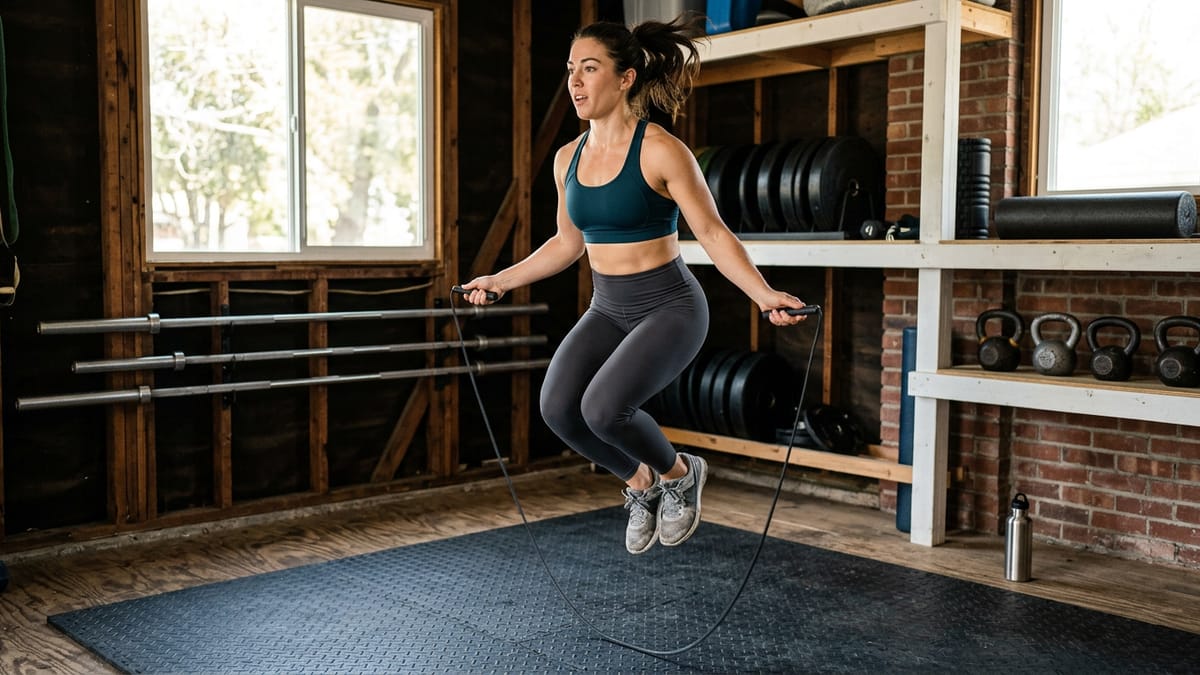
A jump rope is one of the most efficient cardiovascular conditioning tools available. It requires minimal space, costs very little, and packs easily into any gym bag or suitcase. However, jumping rope continuously for a long period can quickly lead to localized muscle fatigue in your calves and shoulders. This fatigue inevitably causes your form to break down, resulting in tripped ropes and frustrating workouts.
By structuring your jump rope sessions as interval workouts, you can maintain a high level of intensity without burning out your muscles prematurely. Alternating periods of work with short periods of rest allows your heart rate to remain elevated while giving your calves and wrists just enough time to recover. This approach transforms a simple schoolyard activity into a formidable conditioning tool.
Why Jump Rope Intervals Work
When you jump rope, you engage your entire body. Your calves, hamstrings, and glutes power the jumps, while your core stabilizes your spine. Your shoulders, forearms, and wrists work constantly to turn the rope. Because so many muscle groups are active simultaneously, the cardiovascular demand is exceptionally high.
Using a work-to-rest ratio allows you to push your speed and coordination during the active intervals. Instead of settling into a slow, plodding rhythm just to survive a twenty-minute continuous session, you can practice dynamic footwork, explosive bounds, and rapid rope turns. The brief rest periods ensure you start each new round with crisp form, reducing the impact on your joints and lowering the chance of catching the rope on your toes.
Setting Up for Success
Before starting your timer, you need to ensure your equipment and environment are optimized for safety and performance.
Choosing and Sizing Your Rope
For most fitness goals, a standard PVC licorice rope or a lightweight cable speed rope is ideal. Weighted heavy ropes are excellent for upper body endurance, but they are not necessary when you are first learning interval timing.
To size your rope correctly, stand on the center of the cable with both feet. Pull the handles straight up along your body. The base of the handles (where they connect to the cable) should reach your armpits. If the rope is too long, it will bounce off the floor and ruin your timing. If it is too short, you will be forced to crouch to clear it. Most modern ropes have adjustable screws near the handles, allowing you to easily cut and set the perfect length.
Surface and Footwear
Never jump rope on concrete or asphalt if you can avoid it. Hard surfaces amplify the impact on your shins, knees, and lower back, and they will quickly chew through the coating on your rope cable. Instead, jump on a dense rubber gym mat, a wooden floor, or smooth asphalt if no other option exists. Wear supportive athletic shoes with adequate forefoot cushioning. Barefoot jumping is a fantastic way to strengthen the feet and lower legs, but it should be approached very gradually to prevent Achilles strain.
Essential Form and Technique
Efficient jumping is all about economy of motion. The less excess movement you produce, the faster and longer you can jump.
- Hand Placement: Keep your hands roughly at hip height, positioned slightly in front of your body. Your elbows should remain tucked close to your ribs.
- Wrist Action: The rotation of the rope should come from small, quick circles made by your wrists, not from your shoulders or elbows.
- Jump Height: You only need to jump about one inch off the floor to clear the cable. Jumping too high wastes energy and increases the impact upon landing.
- Posture: Keep your chest up, your eyes looking straight ahead (not down at your feet), and maintain a slight bend in your knees to absorb the landing.
The 10-Round Jump Rope Interval Routine
This routine uses a 45-second work and 15-second rest protocol. The 45-second work period is long enough to tax your cardiovascular system, while the 15-second rest gives you just enough time to catch your breath, shake out your shoulders, and prepare for the next round.
You can track this exactly by using the Workout Timer with the 45s on / 15s off preset. The total workout time, excluding the warm-up, is exactly 10 minutes.
The Warm-Up
Do not skip the warm-up. Jumping rope places immediate demand on your lower legs. Spend three to five minutes performing dynamic movements before picking up the rope. Complete 20 bodyweight calf raises, 10 deep bodyweight squats, and perform ankle circles (10 rotations each direction per foot). Finally, do one minute of shadow jumping—mimicking the jump rope motion without actually holding the rope.
The Workout Structure
| Round | Work (45s) | Rest (15s) |
|---|---|---|
| 1 | Basic Bounce | Breathe, shake out wrists |
| 2 | Basic Bounce | Breathe, shake out wrists |
| 3 | Boxer Skip | Breathe, shake out wrists |
| 4 | Boxer Skip | Breathe, shake out wrists |
| 5 | High Knees | Breathe, shake out wrists |
| 6 | High Knees | Breathe, shake out wrists |
| 7 | Basic Bounce (Fast Pace) | Breathe, shake out wrists |
| 8 | Boxer Skip (Fast Pace) | Breathe, shake out wrists |
| 9 | Freestyle / Max Effort | Breathe, shake out wrists |
| 10 | Freestyle / Max Effort | Workout Complete |
Breakdown of the Footwork Techniques
Varying your footwork throughout the interval session prevents muscular fatigue from accumulating in one specific area and keeps your brain engaged.
The Basic Bounce
This is the foundational movement. Keep your feet close together and jump with both feet simultaneously. Focus on keeping your jumps incredibly low to the ground and turning the rope strictly with your wrists. During Rounds 1 and 2, use the Basic Bounce to find your rhythm and establish a steady breathing pattern. In Round 7, use the same technique but attempt to rotate the rope faster, increasing the revolutions per minute.
The Boxer Skip
The Boxer Skip is used by fighters to conserve energy while staying light on their feet. Instead of jumping with both feet at once, you shift your weight slightly from one foot to the other with each turn of the rope. As the rope passes under you, the working foot takes the brunt of the weight while the resting foot lightly taps the floor. Alternate your weight side to side with every revolution. This technique dramatically reduces the burn in your calves, allowing you to jump for longer periods.
High Knees
High knees will spike your heart rate significantly. Run in place while turning the rope, driving your knees up to waist height with each step. The rope should pass under your foot with every step. If you struggle with the coordination of high knees, you can modify this into a basic alternating jog step, keeping your feet lower to the ground.
Freestyle / Max Effort
For the final two rounds, the goal is to empty the tank. If you have mastered double unders (turning the rope twice under your feet in a single jump), this is the time to attempt them. If you prefer to stick to the basic bounce, focus on pure speed. Try to string together as many unbroken jumps as possible before the timer sounds.
Scaling the Routine for Beginners
If you are new to jumping rope, jumping continuously for 45 seconds may lead to form breakdown and repeated tripping. Tripping is completely normal when learning, but it can be frustrating if it happens every few seconds.
To scale this workout, adjust your work-to-rest ratio. Beginners should start with a 1-to-1 ratio, giving the nervous system more time to reset. Use the Exercise Timer set to 30 seconds of work and 30 seconds of rest. Stick entirely to the Basic Bounce until you can complete 8 to 10 rounds without tripping more than once or twice per round. Once you build that baseline coordination, you can gradually increase the work intervals and decrease the rest.
Incorporating Jump Rope Intervals into Your Week
Because jumping rope involves hundreds of small plyometric impacts, you should manage your volume carefully to avoid overuse injuries like shin splints or plantar fasciitis. If you are unaccustomed to jumping, limit this routine to two times per week, spacing the days out by at least 48 hours.
As your lower legs adapt, you can perform this 10-minute routine three to four times a week. It serves as an excellent standalone cardio session on active recovery days, or it can be bolted onto the end of a strength training workout as a high-intensity finisher.
Cool Down and Recovery
After your final round, take three to five minutes to lower your heart rate. Walk slowly around your workout area. Because jumping heavily taxes the posterior chain of the lower leg, stretching is vital.
Perform a wall calf stretch: stand facing a wall, place one foot back with the heel flat on the floor, and lean forward until you feel a deep stretch in the back of your lower leg. Hold this for 60 seconds on each side. If you feel tightness in the arches of your feet, rolling the bottom of your foot over a lacrosse ball or a frozen water bottle can help release tension in the plantar fascia.
Always consult with a healthcare professional before beginning any new exercise program, especially if you have a history of foot, ankle, knee, or lower back issues. Modify the movements as needed and listen to your body's signals regarding pain versus normal muscular fatigue.
Frequently asked questions
How long should a jump rope interval workout be?
A 10 to 15-minute session is highly effective when using intervals. Because jumping rope is a high-impact, high-intensity exercise, keeping the workouts relatively short helps maintain proper form and prevents lower leg injuries.
Can I do jump rope intervals every day?
It is generally best to jump rope three to four times a week rather than every day. Your calves, ankles, and feet need time to recover from the repetitive impact, especially when you are first starting.
What if I keep tripping over the rope?
Tripping is usually caused by fatigue, jumping too high, or moving your arms away from your body. Stick to shorter work intervals, ensure your elbows are tucked in, and focus on turning the rope with just your wrists.
Does jumping rope build muscle?
While it is primarily a cardiovascular exercise, jumping rope builds muscular endurance in your calves, shoulders, and forearms. It will not build large amounts of muscle mass like weightlifting, but it promotes excellent lower-body tone and conditioning.
Use this timer
Start the 45s on / 15s off timer — 45s work / 15s rest × 10 rounds. It runs in your browser with sound cues, and there is nothing to install.