How to Build Strength and Balance Simultaneously
By Simple HIIT Timer Team · October 4, 2026
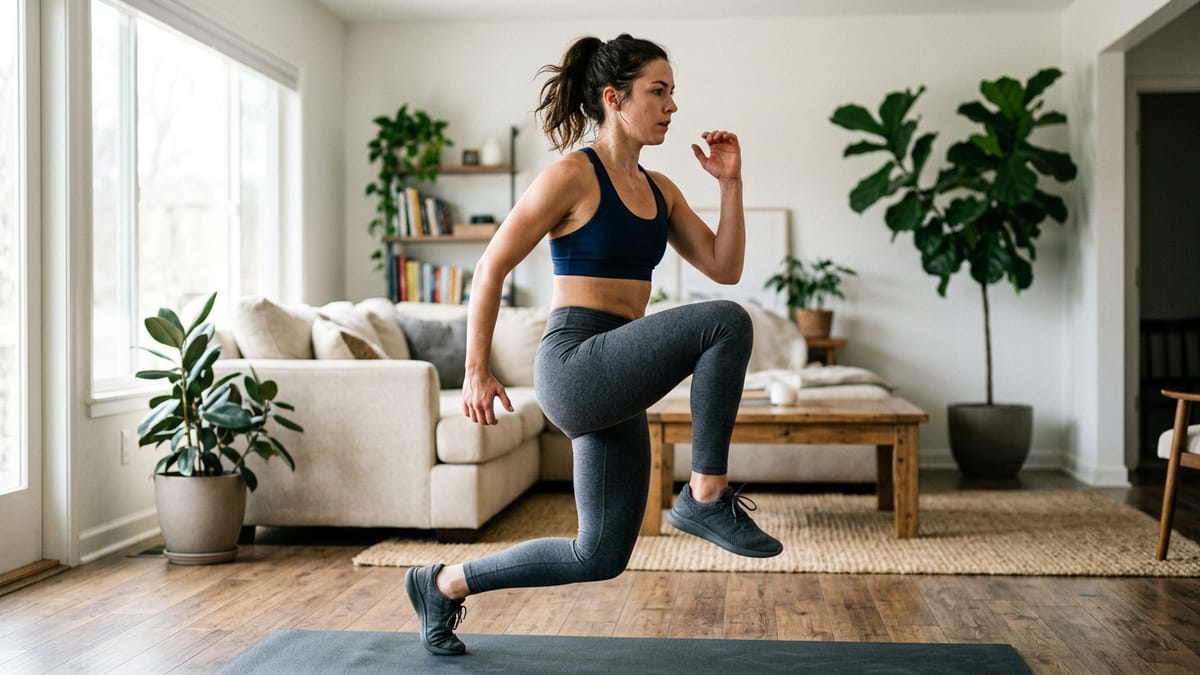
Real-world movement does not happen while strapped into a seated machine. When you carry a heavy box up a narrow staircase, hike down a rocky trail, or simply catch yourself after tripping on an uneven sidewalk, your body relies on two physical attributes working in perfect, simultaneous harmony: strength and balance. Recently, there has been a massive surge of interest in fitness routines that build strength and balance at the same time. This trend makes perfect sense. Isolating individual muscles builds raw power, but it does little to train your nervous system to stabilize that power in unpredictable, three-dimensional space.
By combining these two elements into a single workout, you develop functional, resilient fitness that translates directly to everyday life, enhanced athletic performance, and long-term joint health. This guide will teach you exactly how to train both qualities simultaneously, using safe, proven exercises you can do at home or in the gym.
The Connection Between Strength and Balance
Understanding the connection between strength and balance requires a quick look at how your body moves. Every time you perform an action, your muscles take on different roles. The prime movers are the large muscles responsible for generating the force required to complete the movement. The stabilizers are the smaller, deeper muscles that fire to keep your joints aligned and your body upright while the prime movers do their job.
When you use a chest press machine, the machine acts as your stabilizer, allowing you to focus entirely on pushing. But when you do a single-arm dumbbell press while lying on a bench, your core, hips, and shoulder stabilizers must engage to keep you from rolling off. Balance training is essentially stability training. By deliberately choosing exercises that challenge your center of gravity, you force your prime movers and your stabilizers to work together. This builds a robust, injury-resistant body.
Safety First: How Not to Train Balance
Before diving into the exercises, it is critical to address how not to train balance. A widespread and dangerous misconception is that to improve stability, you need to perform heavy strength exercises on unstable surfaces. You may have seen people doing squats on a stability ball, or attempting complex unilateral movements like Bulgarian split squats and single-leg Romanian deadlifts while standing on a squishy balance pad or even with their eyes closed.
You should avoid these practices entirely. Performing heavy or complex lifts on an unstable surface introduces a severe, unnecessary risk of falling, rolling an ankle, or sustaining a joint injury. When your foundation is constantly shifting, your nervous system forces your muscles to drastically reduce the amount of force they can produce in order to protect your joints. This means you are no longer lifting enough weight to effectively build strength.
Furthermore, the real world is composed of mostly solid ground. The safest, most effective way to build simultaneous strength and balance is to perform unilateral exercises on a solid, stable floor. By changing your stance, removing a point of contact, or shifting a weight to one side of your body, you force your core, hips, and ankles to work overtime without compromising your safety or your ability to lift a meaningful amount of weight.
The Best Exercises for Simultaneous Strength and Balance
To build a routine that challenges both your power and your stability, you need exercises that move your body through different planes of motion while managing an offset center of gravity. Here are five of the best movements for the job.
1. Reverse Lunge to Knee Drive
This is a phenomenal exercise for the lower body that demands significant balance during the transition phase. Start by standing tall with your feet hip-width apart. Step your right foot backward and lower your hips until both knees are bent at a 90-degree angle. Your back knee should hover just above the floor. Push powerfully through your front left heel to stand back up, but instead of returning your right foot to the floor, drive your right knee up toward your chest and balance on your left leg for a full second. Step back into the next repetition. This pause at the top forces your ankle and hip stabilizers to lock in.
2. Single-Leg Romanian Deadlift (Solid Ground)
This movement builds immense strength in your hamstrings and glutes while testing your balance. Stand on your left leg with a slight micro-bend in your left knee. Keep your back perfectly flat and your core braced. Hinge at your hips, pushing your hips backward while your right leg extends straight out behind you. Lower your torso until it is nearly parallel to the floor, or until you feel a deep stretch in your left hamstring. Drive your hips forward to return to the starting position. If you are a beginner, perform this with just your bodyweight and stand near a wall so you can tap it for support if you lose your balance. As you improve, hold a dumbbell in the hand opposite to your working leg.
3. Staggered Stance Single-Arm Row
Traditional rows are great for back strength, but altering your stance turns the movement into a serious anti-rotation and balance challenge. Hold a dumbbell in your right hand. Step your left foot forward and your right foot back, keeping most of your weight on your front leg. Hinge forward at the hips, resting your left forearm on your left thigh for light support. Let the dumbbell hang straight down. Pull the dumbbell up to your right hip, squeezing your back muscles, then lower it with control. Because the weight is only on one side of your body, your core must fight to keep your torso square to the floor.
4. Lateral Lunge
Most people only train in forward and backward motions, but life requires side-to-side stability. Stand tall with your feet together. Take a wide step to your right side. Keep your left leg perfectly straight, push your hips back, and bend your right knee to lower your body into a lunge on the right side. Keep your chest up and your right heel firmly planted on the floor. Push off your right foot powerfully to return to the starting position. This exercise builds strength in your quads and glutes while improving the mobility and stability of your hips and ankles.
5. Bird-Dog with Isometric Hold
This floor-based exercise is essential for core stability and spinal health. Start on your hands and knees, with your wrists directly under your shoulders and your knees under your hips. Keep your spine in a neutral position. Simultaneously extend your right arm straight out in front of you and your left leg straight out behind you. Squeeze your left glute and brace your core so your lower back does not arch. Hold this fully extended position for three to five seconds, focusing on staying perfectly still, before returning to the starting position.
The 20-Minute Strength and Balance Workout Plan
Now you can put these movements together into a highly effective 20-minute workout. Interval training is the perfect format for this routine because it allows you to focus entirely on the quality of your movement for a set period, rather than rushing to count repetitions. You will work for 40 seconds, followed by 20 seconds of rest to reset your posture and prepare for the next movement.
Warm-Up (5 Minutes)
Before starting the timer, spend five minutes warming up your joints. Perform light cardio, such as jogging in place or doing jumping jacks, followed by arm circles, hip rotations, and bodyweight squats to prepare your muscles for the work ahead.
The Circuit
For the workout, you will complete four total rounds of the five exercises. Since most of these exercises are one-sided, you will alternate sides on each round. For example, in round one, perform the lunges and deadlifts on your left leg. In round two, perform them on your right leg. By the end of the four rounds, you will have completed two sets per side.
Set up your interval timer. If you want to get started immediately, you can load the Full body: 40s / 20s preset on the exercise timer page. The structure is simple:
| Station | Exercise | Work Time | Rest Time |
|---|---|---|---|
| 1 | Reverse Lunge to Knee Drive | 40s | 20s |
| 2 | Single-Leg Romanian Deadlift | 40s | 20s |
| 3 | Staggered Stance Row | 40s | 20s |
| 4 | Lateral Lunge | 40s | 20s |
| 5 | Bird-Dog | 40s | 20s |
In Round 1, focus all unilateral movements on your left side. In Round 2, switch your bias to the right side. Continue alternating for all four rounds.
Cool-Down (3-5 Minutes)
When you finish the 20-minute circuit, take three to five minutes to cool down. Focus on static stretches for your hamstrings, glutes, and hips. Deep, controlled breathing during this phase will help lower your heart rate and signal to your body that the workout is over.
How to Progress Your Workouts Safely
As your balance and strength improve over the coming weeks, you will need to progress the exercises to keep challenging your body. Remember, you do not need to introduce unstable surfaces to make the routine harder. Instead, focus on creating more tension.
- Slow the tempo: Slow down the lowering phase of the lunge or the deadlift to three or four seconds.
- Add pauses: Pause for a full two seconds at the most challenging point of the movement.
- Increase resistance: If you are currently using only your bodyweight, begin holding light dumbbells or kettlebells.
- Train barefoot: If you have been training in thick, heavily cushioned running shoes, try performing this workout in flat-soled training shoes or bare feet, provided you have no foot injuries and are in a safe environment. Removing the artificial cushion forces the small stabilizing muscles in your feet to work significantly harder.
By consistently applying these safe progression strategies, you will build a body that is not only strong enough to handle heavy loads, but stable enough to move through the real world with confidence and control.
Frequently asked questions
Can you build strength and balance at the same time?
Yes, unilateral exercises like lunges and single-leg deadlifts challenge your prime mover muscles to generate force while simultaneously forcing your core and joint stabilizers to keep your body upright.
Do I need a balance board to improve stability?
No. Performing single-leg exercises on solid ground is safer and more effective for building functional strength than using unstable surfaces, which limit the amount of weight you can safely lift.
How often should I do balance workouts?
Incorporating balance and stability exercises two to three times a week is sufficient. You can add them to your regular strength routine or dedicate a specific 20-minute session to them.
Use this timer
Start the Full body: 40s / 20s timer — 40s work / 20s rest × 10 rounds. It runs in your browser with sound cues, and there is nothing to install.