Gentle Interval Training for Seniors: A 15-Minute Routine
By Simple HIIT Timer Team · October 28, 2026
Why Gentle Interval Training is Great for Seniors
As we age, staying active is one of the most powerful things we can do for our overall health. Regular exercise helps maintain muscle mass, protects bone density, and keeps our heart and mind sharp. While the term “high-intensity interval training” might sound intimidating, the core principle is simply alternating between periods of work and rest. The “intensity” is entirely relative to your personal fitness level.
Gentle interval training adapts this effective method for active older adults, focusing on low-impact movements that are easy on the joints. The benefits are significant:
- Improved Cardiovascular Health: Short bursts of activity elevate your heart rate safely, strengthening your heart muscle and improving circulation.
- Muscle and Bone Strength: Resistance exercises, even just using your body weight, help combat age-related muscle loss (sarcopenia) and bone density decline (osteoporosis).
- Enhanced Balance and Coordination: Many functional movements in this routine are designed to improve your stability, which is crucial for preventing falls.
- Increased Energy and Mood: Exercise is a natural mood booster and can lead to better energy levels throughout the day.
Essential Safety and Setup Tips
Before you begin any new workout, safety should be your top priority. Keep these points in mind to ensure a positive and effective experience.
Always Warm-Up and Cool-Down
Never jump straight into a workout. A 5-minute warm-up prepares your body for movement by gradually increasing your heart rate and warming up your muscles and joints. Try light activities like marching in place, arm circles, and gentle leg swings. After your workout, a 5-minute cool-down featuring gentle static stretches (like a quad stretch or hamstring stretch, holding for 20-30 seconds) helps your body recover.
Listen to Your Body
The golden rule of exercise is to move without pain. You should feel your muscles working, but you should never feel sharp, stabbing, or joint pain. If an exercise hurts, stop immediately. You can either modify it, substitute it with another movement, or simply rest for that interval.
Focus on Form
Performing an exercise with good form is more important than speed or repetitions. Proper technique ensures you’re working the correct muscles and minimizes the risk of injury. It can be helpful to have a sturdy chair or a wall nearby for support during standing exercises.
Stay Hydrated
Keep a glass of water nearby and sip it before, during, and after your workout. Proper hydration is key for muscle function and overall well-being.
Check with a Doctor
It's always a good idea to consult with your doctor before starting a new exercise program, especially if you have pre-existing health conditions, injuries, or concerns about your physical activity level.
The 15-Minute Gentle Interval Workout
This routine is designed to provide a full-body workout that challenges your muscles and cardiovascular system without putting stress on your joints. The structure is simple: 40 seconds of work followed by 20 seconds of rest. You will perform 12 different exercises for one complete round, which takes 12 minutes. Take a minute of rest, then repeat the first three exercises for a total of 15 minutes of work.
To follow along, you can use our Exercise Timer. Set the work time to 40 seconds, rest to 20 seconds, and the number of rounds to 12. The timer will guide you through the entire circuit.
The Exercises
- Marching in Place: Start with a basic march. Lift your knees as high as is comfortable and swing your arms naturally. This is a great way to elevate your heart rate.
- Chair Squats: Stand in front of a sturdy chair with your feet shoulder-width apart. Hinging at your hips, lower your body as if you are about to sit down. Lightly tap the chair with your glutes (or sit completely if needed), then press through your heels to stand back up.
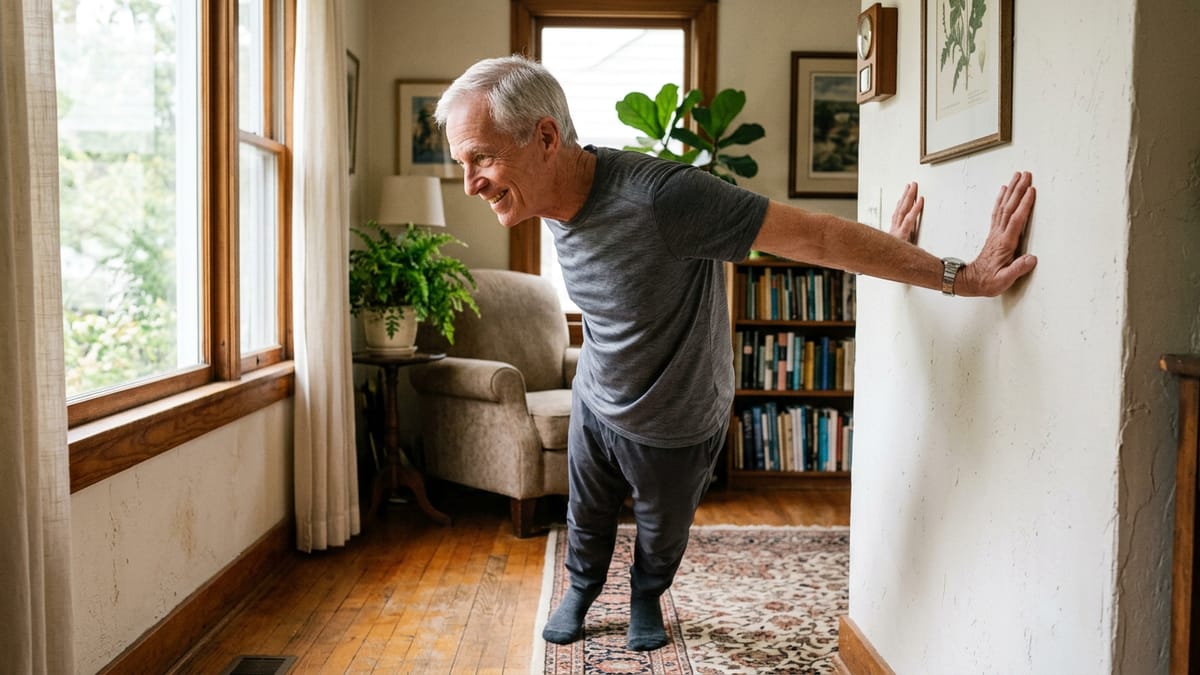
- Wall Push-ups: Stand facing a wall, about arm's length away. Place your hands on the wall, slightly wider than your shoulders. Bend your elbows and lean your body toward the wall, keeping your back straight. Push back to the starting position.
- Seated Leg Extensions: Sit tall on the edge of a chair. Extend one leg straight out in front of you, squeezing your quadriceps (thigh muscle). Hold for a second, then lower it back down with control. Alternate legs.
- Arm Circles: Stand or sit tall. Extend your arms out to the sides at shoulder height. Make small, controlled circles forward for 20 seconds, then reverse direction and make circles backward for 20 seconds.
- Step-Jacks: This is a joint-friendly version of a jumping jack. Instead of jumping, step your right foot out to the side while raising your arms overhead. Return to the center and repeat on the left side. Alternate sides continuously.
- Glute Bridges: Lie on your back with your knees bent, feet flat on the floor, and arms by your sides. Squeeze your glutes and lift your hips off the floor until your body forms a straight line from your shoulders to your knees. Hold briefly, then lower back down.
- Seated Bicep Curls: Sit tall in a chair. With your palms facing forward, make fists and bend at your elbows, bringing your hands toward your shoulders. Lower with control. If you have light dumbbells or resistance bands, you can incorporate them here.
- Heel-to-Toe Walk: If you have a clear path, walk forward by placing the heel of one foot directly in front of the toes of the other. If space is limited, do this on the spot. This is excellent for improving balance. Use a wall for support if needed.
- Wall Sit: Stand with your back against a wall. Walk your feet out and slide your back down the wall until your knees are bent at a comfortable angle (a 45 to 90-degree angle is ideal). Hold this position, keeping your core engaged.
- Seated Torso Twists: Sit on the edge of a chair with your back straight. Cross your arms over your chest. Gently twist your upper body from side to side, focusing on rotating your torso, not just your shoulders.
- Standing Calf Raises: Stand with your feet flat on the floor, holding onto a chair or wall for balance. Slowly press up onto the balls of your feet, lifting your heels as high as you can. Hold for a moment, then lower your heels back down.
How to Modify and Progress Your Workout
This workout can be easily adjusted to match your fitness level.
Making it Easier (Regression)
- Shorten the Work Interval: If 40 seconds feels too long, try 30 seconds of work and 30 seconds of rest. You can use the Beginner preset on our timer for this.
- Reduce Range of Motion: Don't squat as deeply or lift your knees as high. Move within a range that feels comfortable and safe for you.
- Use More Support: Keep a hand on a chair or wall for all standing exercises to ensure stability.
Making it Harder (Progression)
- Add Light Resistance: Use light dumbbells, water bottles, or resistance bands for exercises like chair squats, seated bicep curls, and glute bridges.
- Increase Speed or Range of Motion: Move a little faster (while maintaining good form) or go deeper into the movements.
- Add a Second Round: Once you can complete the full 15-minute workout comfortably, try doing two full 12-minute rounds with a 1-2 minute rest in between for a more challenging session.
Gentle interval training is a fantastic way to build strength, improve heart health, and boost your confidence. By listening to your body and staying consistent, you can enjoy the powerful benefits of an active lifestyle at any age.
Frequently asked questions
How often should a senior do interval training?
Start with 2-3 non-consecutive days per week to allow for recovery. Listen to your body and add more sessions if you feel comfortable and have the energy.
Is HIIT safe for seniors with arthritis?
Low-impact interval training can be beneficial for arthritis by strengthening muscles around joints. However, always consult your doctor first and stick to pain-free movements.
What if I can't do all the exercises?
That's perfectly fine! Substitute any exercise with one you can do comfortably, like marching in place, or simply rest during that interval. The goal is consistent, safe movement.
Use this timer
Start the Full body: 40s / 20s timer — 40s work / 20s rest × 10 rounds. It runs in your browser with sound cues, and there is nothing to install.