Peripheral Heart Action Training: A Full-Body Circuit Guide
By Simple HIIT Timer Team · November 6, 2026
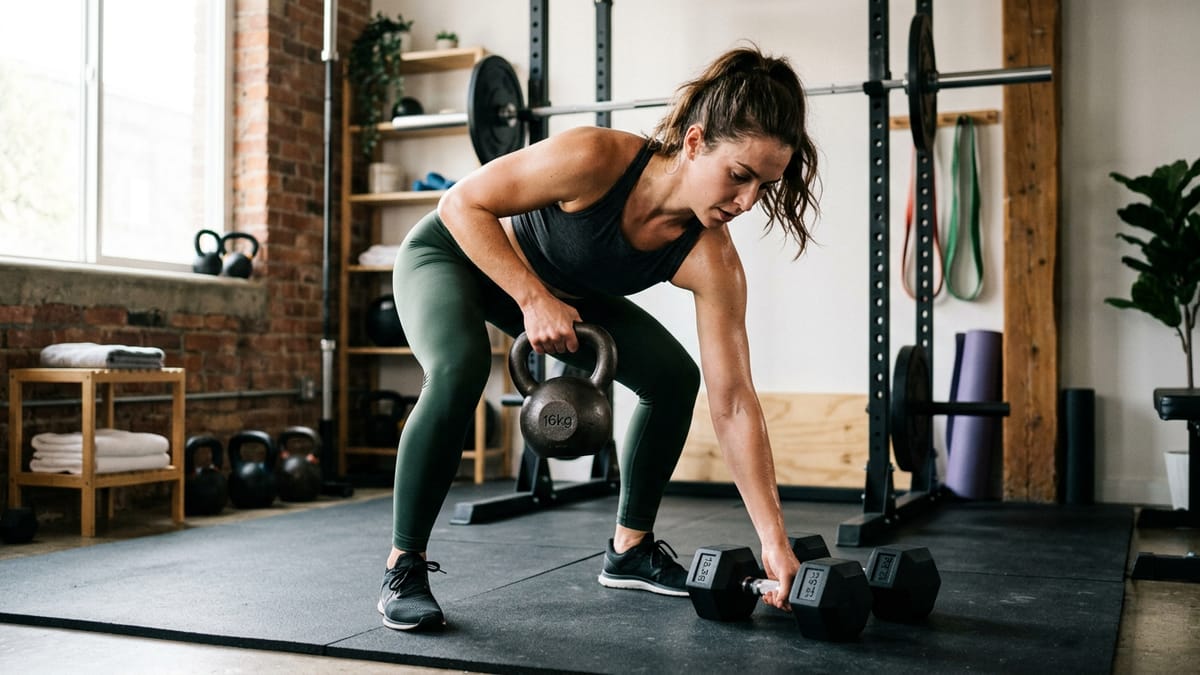
When you want to improve cardiovascular fitness and build muscular endurance at the same time, finding the right routine can be a challenge. Traditional high-intensity interval training often relies heavily on jumping and explosive movements, which can be hard on the joints. Heavy weightlifting builds strength but frequently leaves your heart rate relatively low between sets. Enter Peripheral Heart Action (PHA) training, a specialized circuit method designed to keep your heart pumping hard without burning out any single muscle group.
Whether you are working out in a fully equipped commercial gym or using a couple of dumbbells in your living room, PHA training offers a highly efficient way to train. By strategically ordering your exercises, you force your cardiovascular system to work overtime while keeping muscular fatigue manageable. Here is everything you need to know about this time-tested method and a complete routine you can try today.
What is Peripheral Heart Action (PHA) Training?
Peripheral Heart Action training is a circuit training protocol that alternates between upper-body and lower-body exercises. The concept was originally developed in the 1960s by fitness pioneer Arthur Steinhaus and popularized by competitive bodybuilders who wanted a way to stay incredibly lean without losing muscle mass to excessive steady-state cardio.
The science behind PHA is elegantly simple. When you perform a strenuous lower-body exercise, like a squat, your heart pumps oxygen-rich blood down to your legs. If you immediately follow that squat with an upper-body exercise, like an overhead press, your heart has to drastically redirect that blood flow back up to your shoulders and arms.
This continuous "shunting" of blood from the lower extremities to the upper extremities requires massive effort from your heart and lungs. As a result, your heart rate stays elevated throughout the entire circuit, delivering an intense cardiovascular workout while you lift weights.
The Benefits of the PHA Method
Incorporating a PHA training workout into your weekly routine provides several distinct advantages over standard straight sets or plyometric-heavy cardio sessions.
Cardio Conditioning Without High Impact
Many interval routines rely on burpees, box jumps, and high knees to spike the heart rate. While effective, these plyometric movements can be tough on the knees, hips, and ankles. PHA training achieves a similar cardiovascular demand through blood flow redirection rather than impact, making it an excellent option for those seeking a joint-friendly alternative.
Reduced Localized Muscle Fatigue
If you perform a circuit consisting of push-ups, shoulder presses, and triceps dips, your pressing muscles will quickly reach failure. Your heart and lungs might have plenty of energy left, but your localized muscles simply cannot do another rep. Because PHA alternates upper and lower body movements, each muscle group gets a built-in active recovery period while the opposite end of the body works. This allows you to sustain a higher intensity of work for a longer duration.
Extreme Time Efficiency
Because you are resting specific muscle groups while working others, you do not need long rest periods between exercises. You can condense a high volume of strength and conditioning work into a 20- or 30-minute window. Setting up a circuit timer ensures you stay on track and maximize every minute of your training session.
The 6-Move Full-Body PHA Workout
This routine requires only a pair of medium-weight dumbbells (or kettlebells) and a little bit of floor space. The goal is to move from one exercise to the next with minimal rest, using only enough time to safely transition your equipment.
| Station | Exercise | Focus | Work / Rest |
|---|---|---|---|
| 1 | Goblet Squats | Lower Body | 45s work / 15s transition |
| 2 | Dumbbell Overhead Press | Upper Body | 45s work / 15s transition |
| 3 | Alternating Reverse Lunges | Lower Body | 45s work / 15s transition |
| 4 | Bent-Over Dumbbell Rows | Upper Body | 45s work / 15s transition |
| 5 | Weighted Glute Bridges | Lower Body | 45s work / 15s transition |
| 6 | Push-Ups | Upper Body | 45s work / 15s transition |
Complete this 6-station circuit, then rest for 60 to 90 seconds. Aim for 3 to 4 total rounds. Below is a breakdown of proper form and execution for each movement.
1. Goblet Squats (Lower Body)
Hold a single dumbbell or kettlebell vertically against your chest with both hands. Stand with your feet roughly shoulder-width apart. Keeping your chest up and your core braced, push your hips back and bend your knees to lower into a squat. Go as deep as your mobility allows without your heels lifting off the floor, then drive through your feet to return to the starting position. This targets the quads, glutes, and core.
2. Dumbbell Overhead Press (Upper Body)
Immediately transition to an upper-body press. Stand tall with a dumbbell in each hand at shoulder height, palms facing forward or slightly inward. Brace your abdominals and squeeze your glutes to create a solid base. Press the weights straight up overhead until your arms are fully extended, then lower them back to your shoulders under control. Avoid arching your lower back as you press.
3. Alternating Reverse Lunges (Lower Body)
Hold a dumbbell in each hand down by your sides. Take a controlled step backward with your right foot, lowering your right knee until it gently hovers just above the floor. Your front left knee should be bent at a 90-degree angle. Push off the back foot to return to the starting stance, then repeat on the opposite leg. Keep your torso relatively upright throughout the movement.
4. Bent-Over Dumbbell Rows (Upper Body)
Stand with a dumbbell in each hand. Hinge at your hips, pushing your glutes backward while keeping your back perfectly flat and your chest nearly parallel to the floor. Let the weights hang straight down. Pull the dumbbells up toward your ribcage, squeezing your shoulder blades together at the top of the movement. Lower the weights slowly. This balances out the pressing movements by targeting the muscles of the upper back and biceps.
5. Weighted Glute Bridges (Lower Body)
Lie on your back with your knees bent and feet flat on the floor, about hip-width apart. Safely rest a single dumbbell across the crease of your hips, holding it in place with your hands. Drive your heels into the floor and squeeze your glutes to lift your hips toward the ceiling until your body forms a straight line from your shoulders to your knees. Pause for a second at the top, then lower your hips back down.
6. Push-Ups (Upper Body)
Set aside the weights and get into a high plank position with your hands slightly wider than shoulder-width apart. Your body should form a rigid, straight line from your head to your heels. Lower your chest toward the floor by bending your elbows, keeping them tucked at about a 45-degree angle to your torso. Press back up to full extension. If full push-ups are too challenging, perform them with your hands elevated on a bench or drop to your knees, ensuring your core remains engaged.
How to Time Your PHA Workout
Timing is the most critical element of a successful PHA training workout. If your work periods are too short, you will not generate enough cardiovascular demand. If your transitions are too long, your heart rate will drop, defeating the purpose of the blood-shunting effect.
For most lifters, 45 seconds of work followed by 15 seconds of transition time is the sweet spot. The 45-second window is long enough to complete 10 to 15 deliberate, high-quality reps. The 15-second transition gives you just enough time to safely put down one set of weights, pick up another, and get into position for the next exercise.
You can easily manage this structure using an online circuit timer. Select a preset for 45 seconds of work and 15 seconds of rest, set it for 6 rounds (one full circuit), and focus entirely on your form rather than watching the clock.
Building Your Own PHA Circuits
Once you master the routine above, you can start building your own PHA workouts. The beauty of this training style is its endless versatility. To create a safe and effective routine, follow these basic guidelines:
- Strictly alternate upper and lower body. Never put two upper-body or two lower-body exercises back-to-back.
- Choose compound movements. Exercises that use multiple joints (like squats, rows, and presses) demand more blood flow and oxygen than isolation exercises (like bicep curls or calf raises).
- Include core stability. Your core works hard to stabilize your spine during heavy compound lifts, but you can also swap in an abdominal-focused exercise (like a plank) as an "upper body" station to give your arms a break.
- Balance the movement patterns. If you do a lower-body pushing exercise (squat), try to include a lower-body pulling exercise (Romanian deadlift) later in the circuit. Do the same for the upper body by balancing horizontal and vertical pushes and pulls.
Safety and Best Practices
Because PHA training requires you to transition from standing to lying down (and vice versa) while your heart rate is high, it is not uncommon to feel slightly lightheaded during your first few sessions. Take your time during the transitions, breathe deeply, and do not rush the movements.
Always begin with a thorough warm-up. Spend 5 to 10 minutes performing light dynamic stretches, arm circles, leg swings, and bodyweight variations of the exercises in your circuit to prepare your joints and central nervous system. Start with lighter weights than you would use for traditional strength training; the cardiovascular fatigue will make the weights feel much heavier by the third round.
Finally, as with any new exercise program, listen to your body. If you have any pre-existing medical conditions, particularly related to cardiovascular health or blood pressure, consult with a doctor before attempting a routine that rapidly shifts blood pressure and heart rate like PHA training.
Peripheral Heart Action training is a brilliant way to break out of a fitness rut. By forcing your body to constantly redirect blood flow, you build a resilient cardiovascular system while reinforcing solid movement patterns and muscular strength. Grab your weights, set your timer, and experience this highly effective training style for yourself.
Frequently asked questions
Can I do PHA training with just my bodyweight?
Yes, bodyweight PHA is highly effective. You can alternate exercises like bodyweight squats and push-ups to achieve the same continuous blood flow demand without needing equipment.
How often should I do PHA workouts?
For most people, two to three times a week is plenty. Because it taxes both your cardiovascular and muscular systems, you need adequate recovery days in between sessions.
Is PHA training good for building muscle?
While its primary benefits are endurance and cardiovascular conditioning, using challenging weights during a PHA circuit will stimulate muscle growth and improve overall strength.
Use this timer
Start the 45s station / 15s move timer — 45s work / 15s rest × 12 rounds. It runs in your browser with sound cues, and there is nothing to install.